Product Introduction:
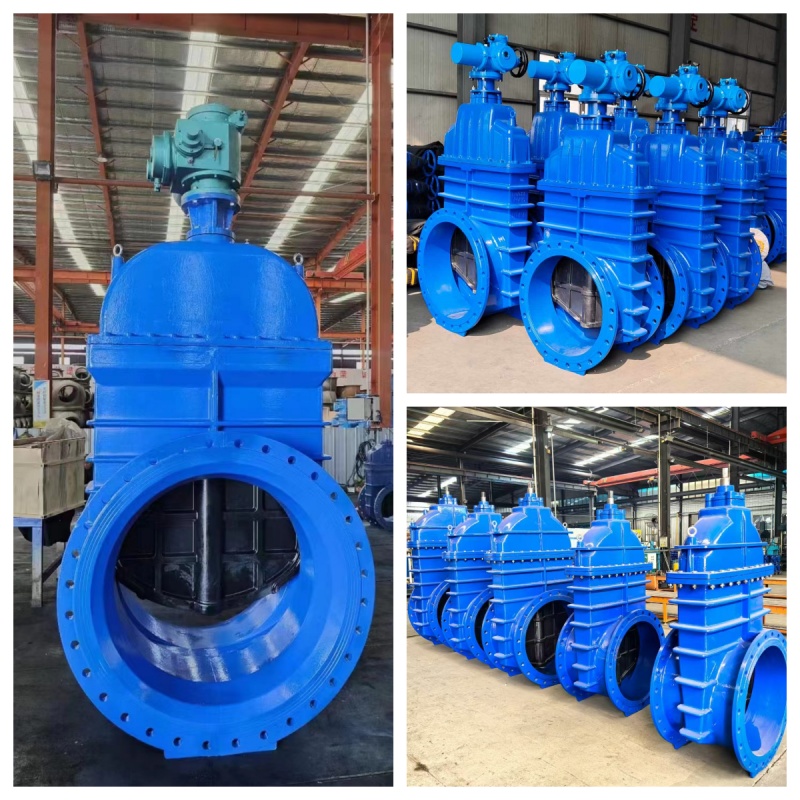
Large-diameter resilient-seated gate valves are optimized and strengthened based on the standard resilient-seated gate valve structure,
specifically developed for high-flow-rate main pipelines such as municipal trunk lines, water plant inlets and outlets, and large sewage pipelines.
Standard diameters range from DN500 to DN1200.
Featuring a thickened ductile iron valve body and a fully encapsulated EPDM rubber gate, it achieves bidirectional bubble-level zero leakage.
Unlike older large-diameter hard-seal gate valves, it is less prone to sand accumulation and has lower opening and closing torque,
making it the mainstream choice for urban water supply trunk pipelines.
Main Features:
1.Reinforced ductile iron QT450 body with fusion bonded epoxy coating, anti-water hammer, corrosion resistant for potable water.
2.Fully EPDM rubber wrapped wedge, bi-directional bubble tight zero leakage.
3.Full bore flat bottom design, no sediment accumulation, available for pipeline pigging.
4.Bevel gear operator for DN600 and above, low operating torque; electric actuator optional for remote automatic control.
5.Non-rising stem for underground valve chamber; rising stem version optional for pump room.
Specifications:
Operation type:Manual-Handwheel
Size: DN40-DN1200
Pressure: PN10/16, Class150,JIS6K/10K
Design Standard:DIN3352,BS5150,EN593, API609
Face to Face Standard: API609,BS5150,DIN3202 F4/F5
Flange Standard:BS4540,DIN2532/2533,ANSI B16.10
Test Standard: BS10 Table D and E EN 12266-1, API 598
Materials:
Body : Ductile Iron
Wedge:Ductile Iron+EPDM
Stem : Stainless Steel
Handwheel :Cast Iron
Characteristic:
Applicable Medium: Water, Oil, Gas
Applicable Temperature:-10~120℃
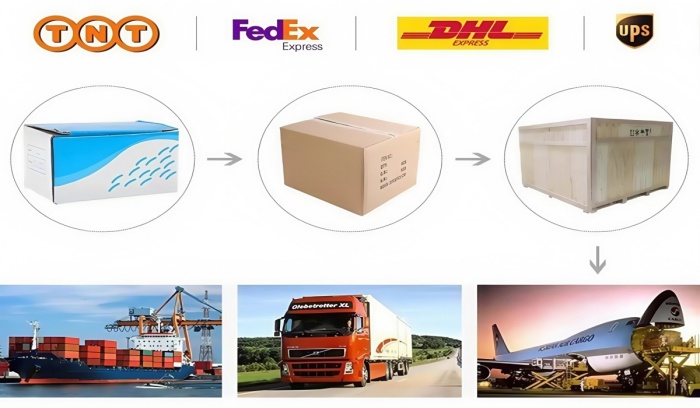
All valves are equipped with professional export protective packaging.
With protective caps on the sealing surfaces, rust-proof treatment, and shock-absorbing material filling to ensure intact transport; the loading is secure and safe.
We can also customize packaging according to customer requirements.
Regarding transportation methods, we can provide appropriate transportation options based on the cargo requirements and the customer's timeliness requirements.
Common transportation methods include: sea freight, air freight, land freight, and express delivery.